Friday, November 20, 2020
 Click the map to create your own at
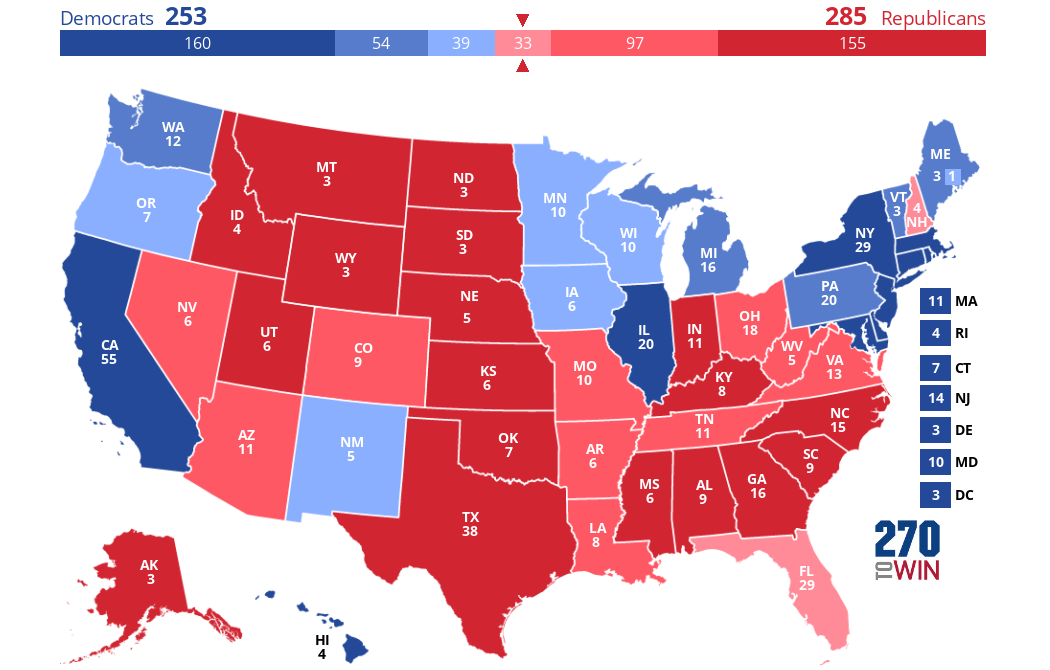
Thursday, November 19, 2020
Tuesday, October 27, 2020
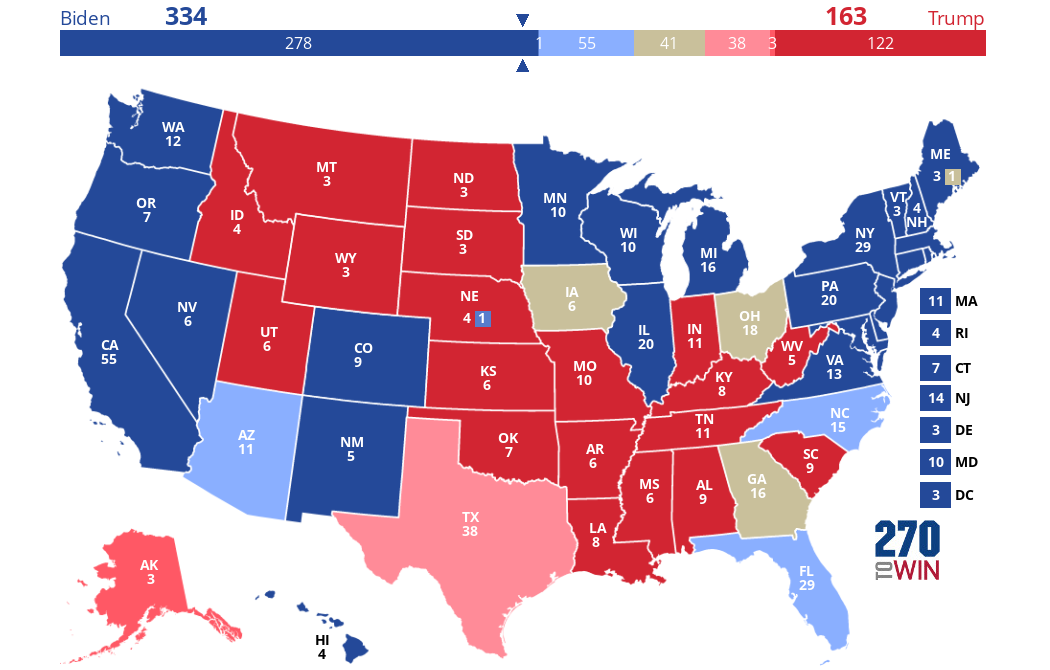
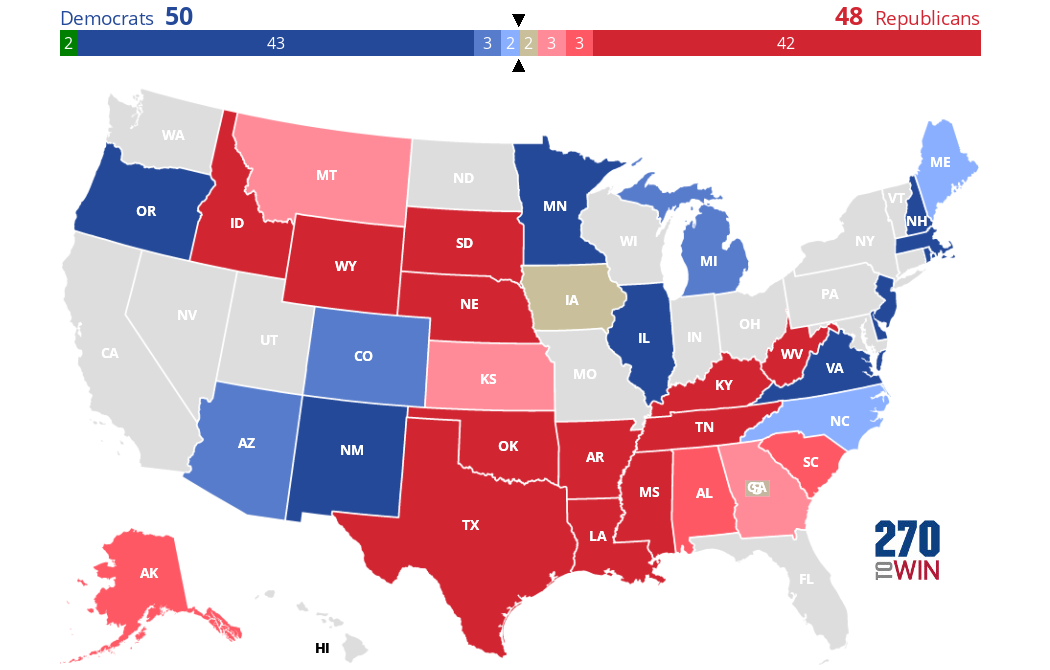
2020 US Presidential Forecast - October 27
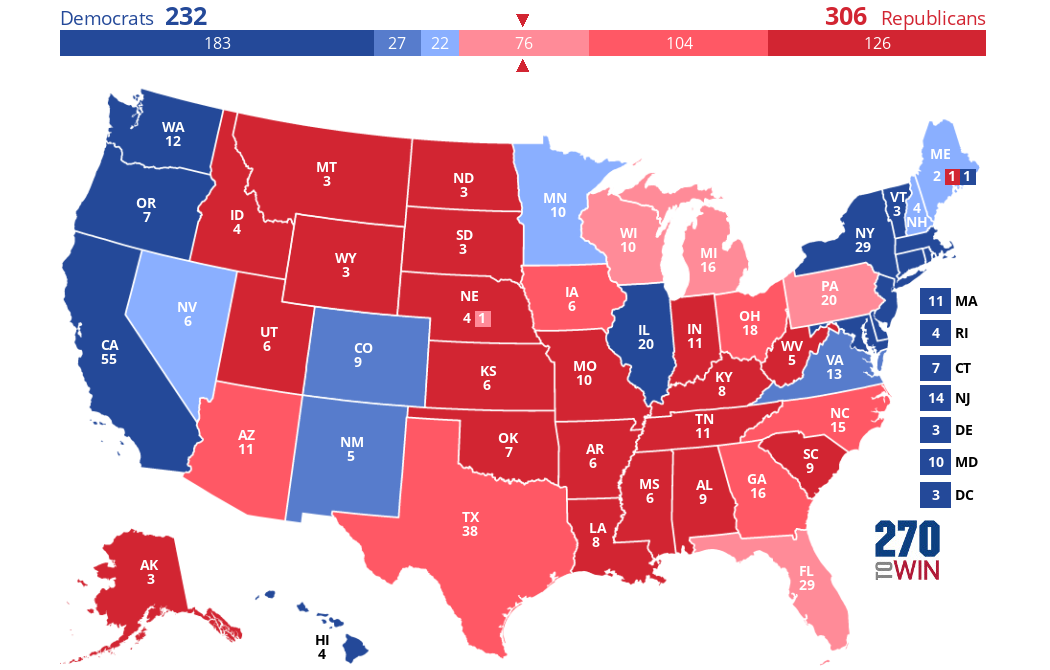
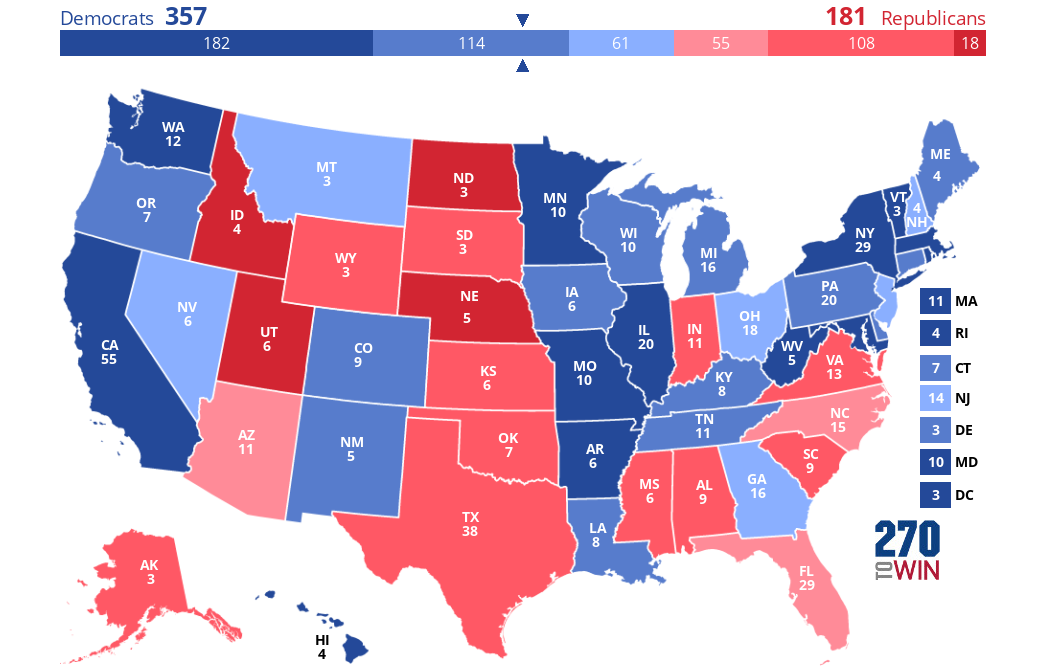
One week to go before the election and nothing has changed since the last update, 8 days ago. Trump has pretty much run out of time to make a comeback. The question is, will he find a way to hold on to power, anyways? It's scary to think about, but it is a possibility.
Tuesday, October 20, 2020
Monday, October 19, 2020
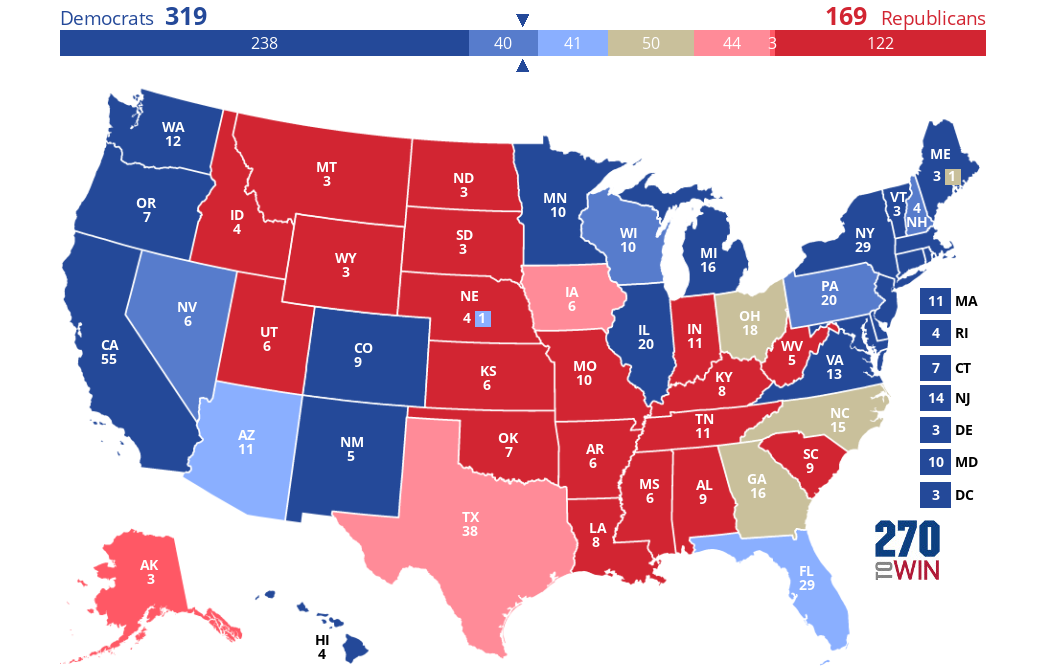
2020 US Presidential Forecast - October 19
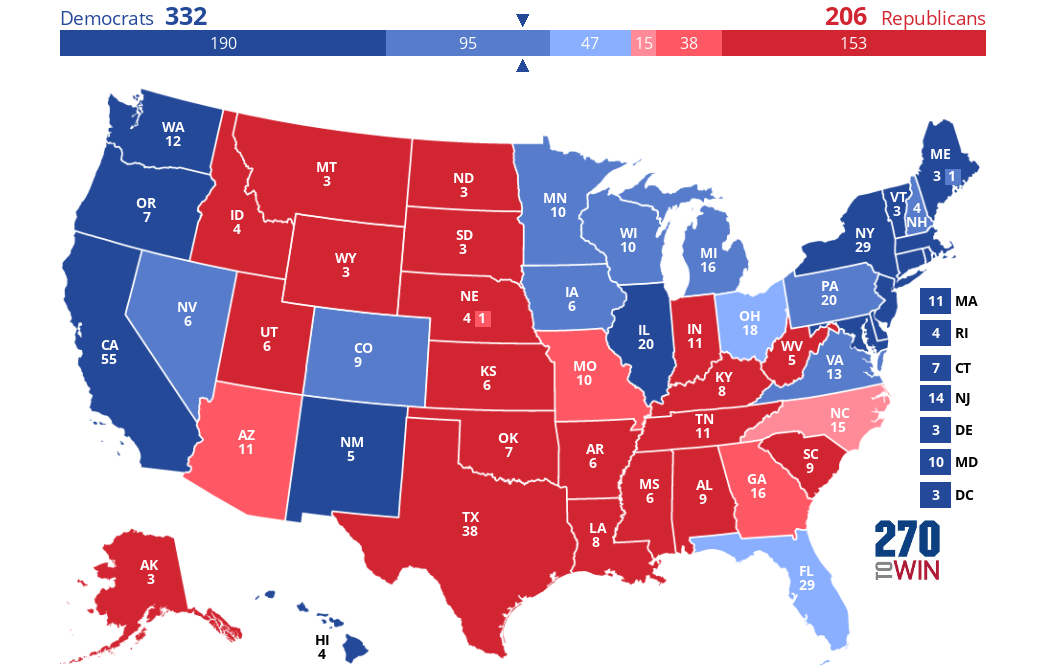
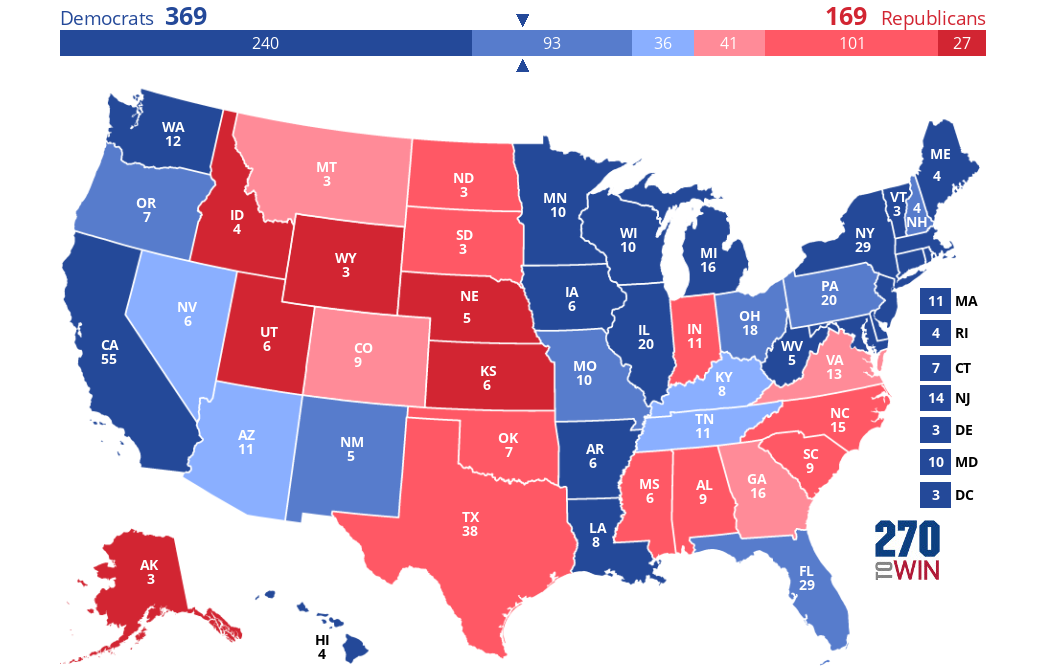
Joe Biden's lead in the polls keeps growing. He now has a 10.7% lead over Trump in the FiveThirtyEight forecast. He has also solidified his position in a few more states since the last update. Pennsylvania, Wisconsin, Nevada and New Hampshire are now all solid Democrat, which give Biden more than enough electoral votes to win, even if he only wins those states that are dark blue on the map. Meanwhile, North Carolina now leans blue while Iowa has moved from lean Republican to tossup.
Tuesday, October 6, 2020
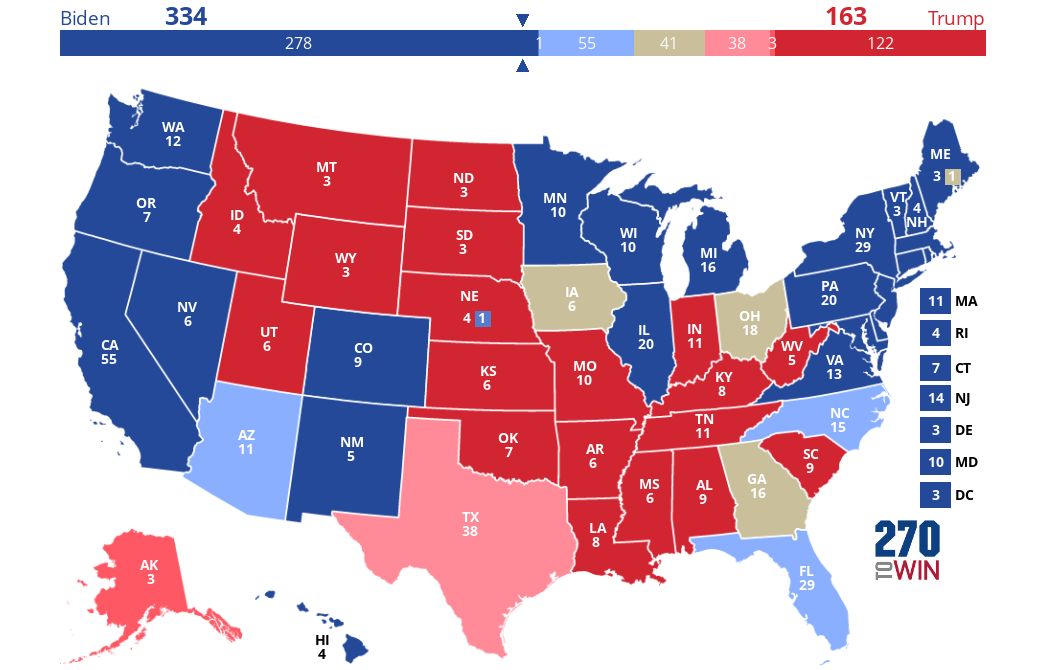
2020 US Presidential Forecast - October 6
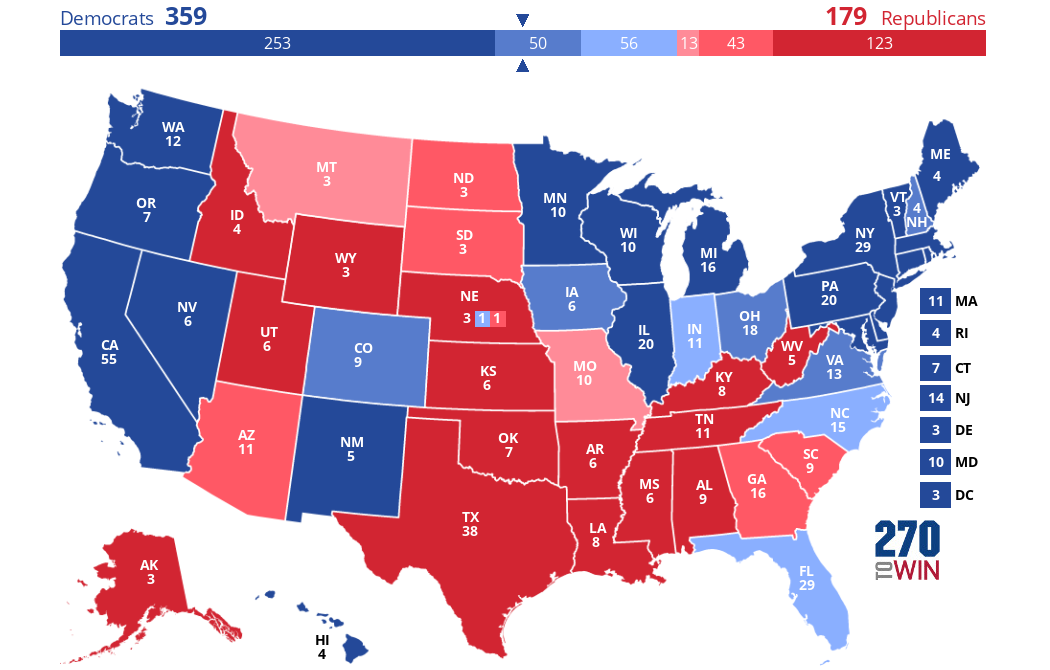
In my last update, I thought the confirmation of a new supreme court justice might change the race. But that has been completely overshadowed, first by a odd performance by Trump at the presidential debate, and then by Trump catching COVID. Meanwhile, Biden seems to be extending his lead. Georgia is now a tossup and Florida is back to leaning Biden. As the crucial trio of Michigan, Wisconsin and Pennsylvania continue to move towards Biden, time is running out for Trump to catch up.
Sunday, September 20, 2020
2020 US Presidential Forecast - September 20
Wednesday, September 9, 2020
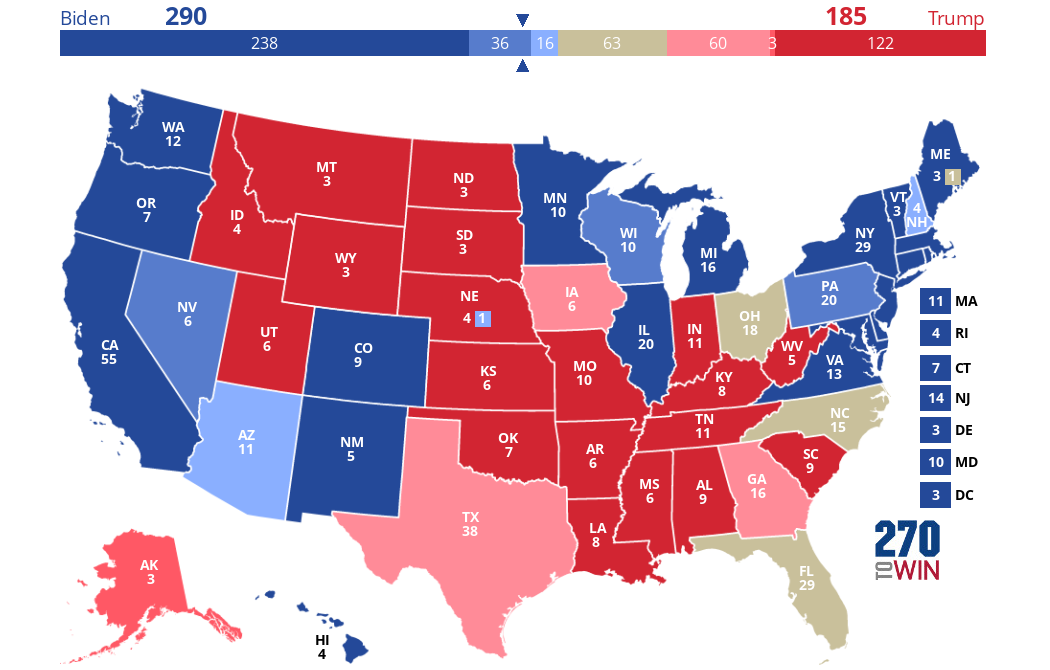
2020 US Presidential Forecast - September 9
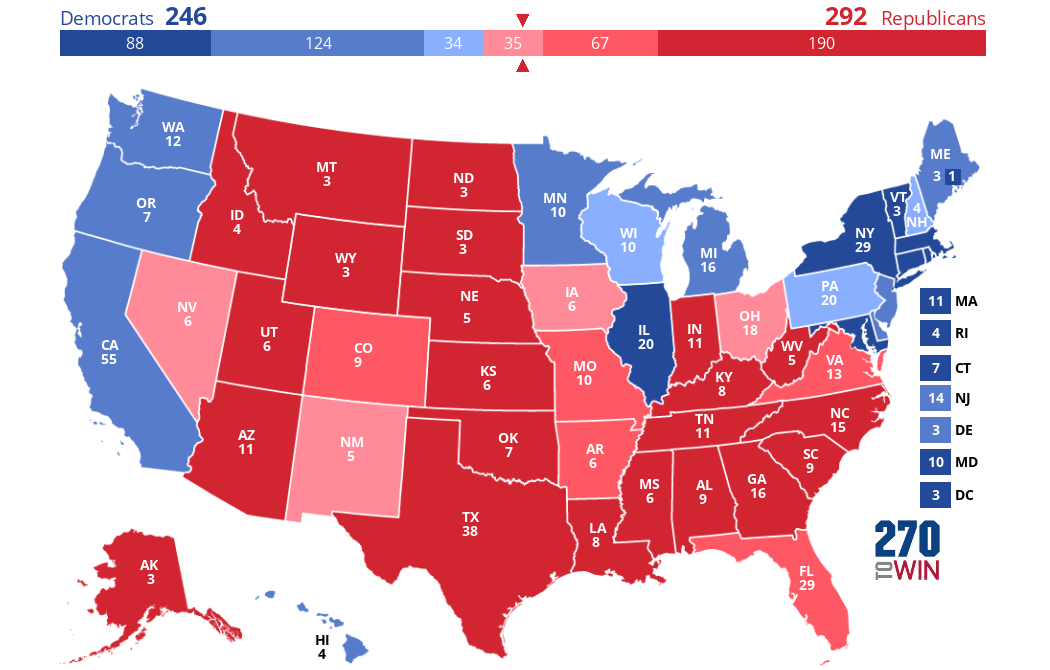
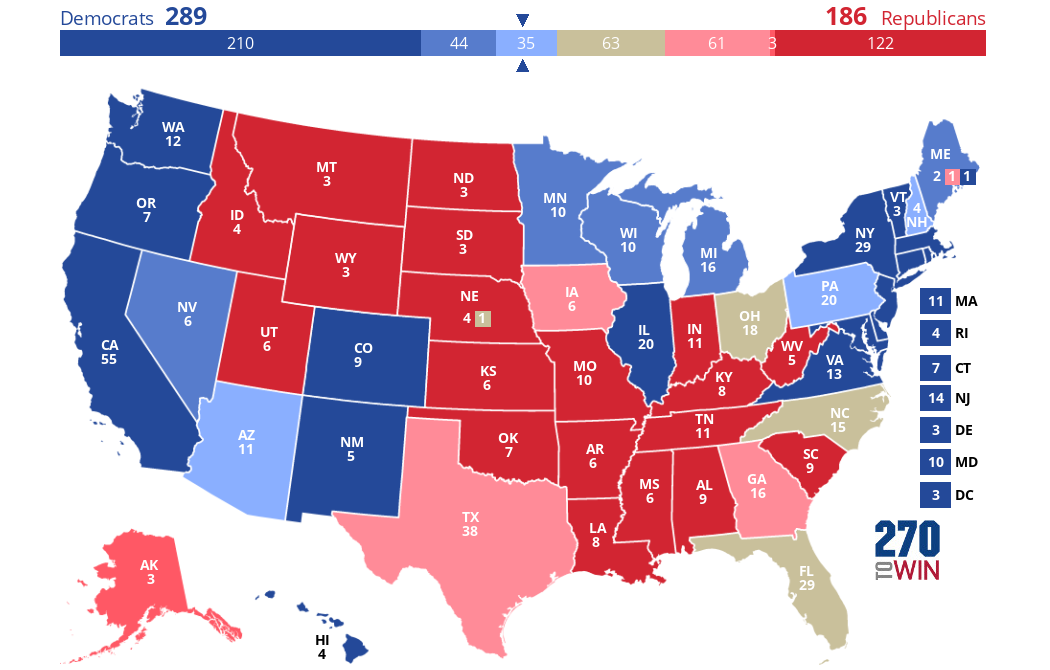
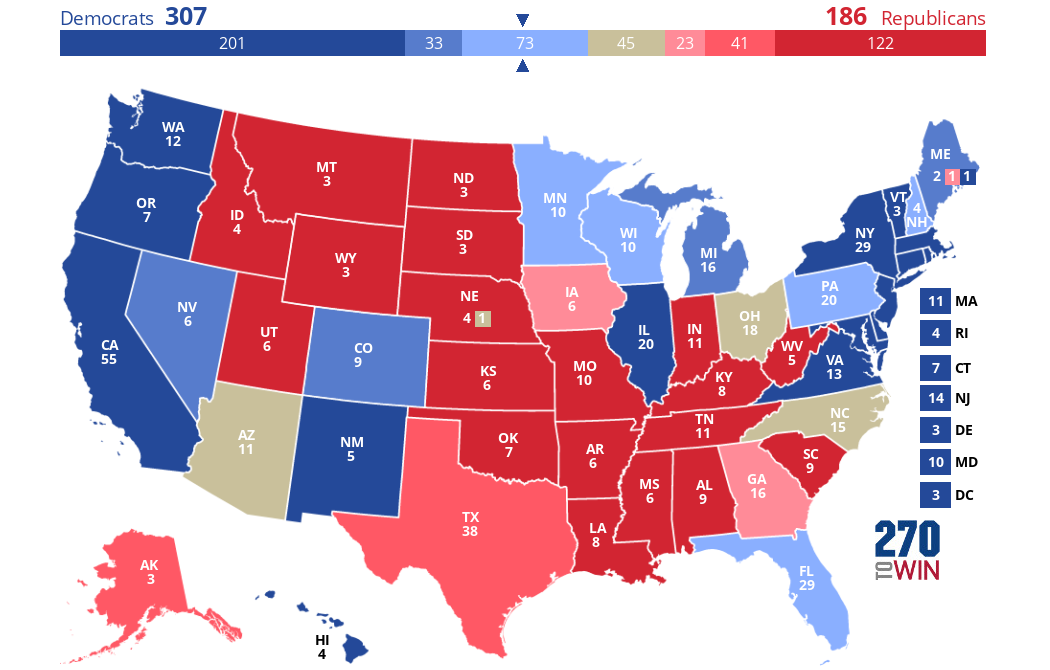
Electoral votes favoring Democratic candidate Joe Biden have gone from 307 in the last update to 289 now, as Florida has moved from lean Democrat to toss-up. However several other key states have moved in Biden's favor. Again, the overall picture is of a clear and stable lead by Joe Biden over Donald Trump but the lead is far from insurmountable.
Wednesday, August 26, 2020
2020 US Presidential Forecast - August 26
Saturday, August 15, 2020
Friday, May 17, 2013
The NDP's failure in B.C.
So how did Christy Clark's Liberals defeat Adrian Dix's NDP so convincingly when every opinion poll right up to the election date showed them behind? First of all, there was obviously a huge failure in polling. A similar failure in the recent election in Alberta could be explained away as an unusual series of events, but there can be no such excuses made for the failure in BC. The polls were simply dead wrong, and until polling companies figure out what went wrong and are able to demonstrate that they have made the necessary corrections, political polls simply cannot be trusted - in Canada at least.
However, while the polls lead almost everyone to believe it would be an easy NDP win, the results were actually in line with what the norm has been in BC politics for decades now. For nearly 60 years, with only a few exceptions, a right wing, or centre-right coalition, have been elected over an NDP opposition with a decisive, but non-overwhelming, majority. The split has typically been around 60-70% of the seats for the winners as compared to around 30-40% for the NDP. Exceptions have been NDP wins in 1972, 1991 and 1996, as well as a crushing 77 to 2 seat win for the Liberals in 2001. From that perspective, this election has been a part of a very stable, long term, trend.
All of this offers little consolation, however, for those of us who had been hoping for an NDP win. In an environment where NDP governments as not the norm (which would include just about everywhere federally or provincially with the exception, perhaps, of Manitoba and Saskatchewan), many things have to go right for the party to win. The elements need to include a very good strategy, a popular or respected leader, and dissatisfaction with the current government. In B.C. there was dissatisfaction with the current government, although a good economy probably muted that somewhat, and Dix was fairly well respected, although the Liberals were able cause some people to doubt his ethics. What the NDP lacked was a strategy that worked. I won't get into this in much detail, as many others have done so (see Climenhaga, Harper and Ramsey), but by refusing to attack the Liberal government, when doing so would have reminded people just why they had grown to dislike them, by refusing to refute accusations levelled against them, and by not making it clear to the public what they stood for, the NDP doomed themselves.
A naturally governing party could, perhaps get away with such strategic failures. However, as much as I hate to admit it, people in most provinces have a mistrust for NDP governments stemming from many decades of being told by other parties and much of the media that they are too radical and that they are incompetent in managing the economy or government finances. It takes some extra effort for the NDP to gain the electorate's confidence, and a weak campaign just isn't good enough to prevail over an unpopular government. For the NDP to win almost anywhere, it will require a convergence of factors, none more important than a plan that works. This is the electorate the NDP faced in B.C. The majority of the population was not used to voting for the party, and when not given a convincing reason to change their default choice, they returned to what was familiar.